
Your customers don't know which one they need. Your website should.
A category page with forty products and a filter bar doesn't answer the only question a customer has: which one is right for me? What that costs you online, and what to put in its place.
A customer lands on your website looking for a heat pump, a hot water cylinder or a pump. They click into the category and find forty products, a filter bar, and a column of specifications they don't understand.
They don't want forty products. They want one. The right one for their house, their site or their job. And nothing on the page tells them which one that is.
What customers do next
Some guess, buy, and send it back when it doesn't fit. Some ring the store and ask a question the person answering can't confidently answer either. Most just leave, and go looking for someone who will tell them what to buy.
None of that shows up as a problem on a report. It shows up as a website that gets visits but not enquiries.
Filters don't answer the question
Filters work when the customer already knows what they want. "Show me 6 kW units" is easy. But most customers don't think in kilowatts, litres per minute or pressure ratings. They think "it's a big living room with lots of windows" or "there are four of us and we all shower in the morning".
Turning that into the right product is exactly what your best salesperson does in the store. Your website just doesn't have one.
Ask the customer, not the catalogue
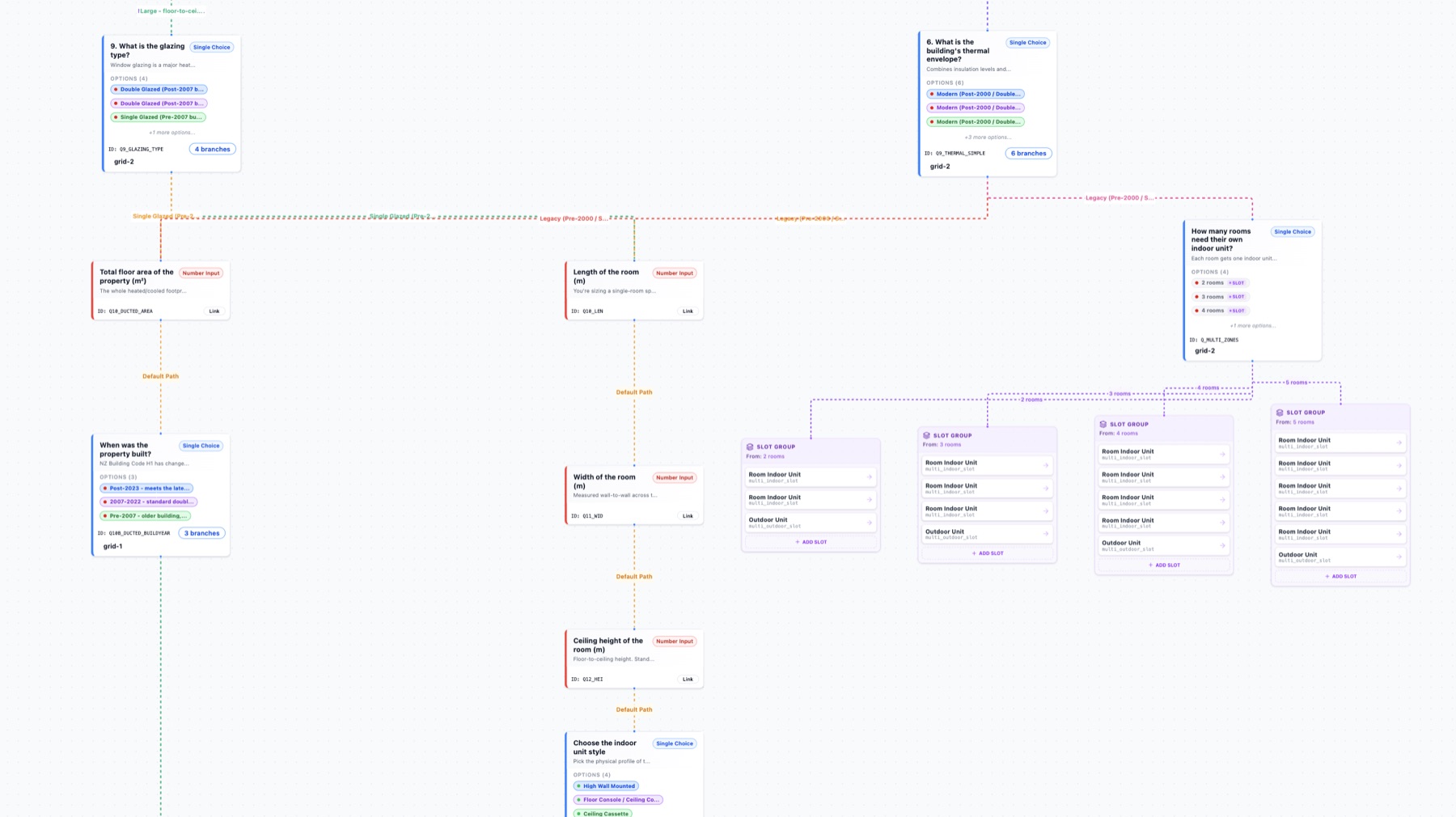
A guided product selector gives your website that salesperson. Instead of a wall of products, the customer answers a few plain questions about what they're trying to do. The selector does the sizing and the matching, and comes back with the product that fits, with a clear next step: buy it, get a quote, or book an installer.
The same selector can run in your stores, so a customer gets the same recommendation online as they would at the counter, whoever they speak to.
What you get from it
- Customers who know what to buy. Fewer people leaving because the choice was too hard.
- Better enquiries. When someone does get in touch, their answers come with them, so the conversation starts halfway through instead of from scratch.
- Fewer wrong sizes. The right product goes out the first time, instead of coming back three weeks later.
- A view of what customers want. What they're asking for, what gets recommended, and where people give up.
Your customers already know their situation. Your website just needs to ask them about it.
Selling technical products online? Talk to us about turning your busiest category into a guided selector.