
Your best salesperson is retiring. Where does their knowledge go?
Most technical businesses have one person who knows which product fits which job. Here's what that's really costing you, and how to keep the knowledge when the person isn't there.
Every technical business has a Dave. The one person who knows which part goes with which job. When a customer asks a tricky question, the call gets transferred to Dave. When a new starter isn't sure, they ask Dave. When Dave's on holiday, everyone waits, or guesses.
It works. Right up until it doesn't.
What it's really costing
Nobody sends you an invoice for depending on one person, so the cost is easy to miss. But it shows up in a few places:
- Dave's day. Your most experienced person spends hours answering the same questions for the counter, the phones and the customers, instead of doing the work only he can do.
- The guesses. When Dave's busy or away, someone picks the product that looks right. A few weeks later it comes back, and so does an unhappy customer.
- New starters. It takes months before someone new can recommend your products with confidence. Until then, they're asking Dave.
- Two answers. Ring twice, speak to two people, get two different recommendations. The customer starts to wonder whether you know your own range.
Why a manual doesn't fix it
The usual answer is to get Dave to write it all down. It rarely works. What Dave knows isn't a list of facts, it's judgement: which questions to ask, in what order, and the exceptions he's learned the hard way. "That one's fine unless it's going outside." "Always go one size up for that application." That kind of knowledge doesn't fit in a document, and nobody reads the document when a customer is waiting anyway.
Keep the knowledge, not just the person
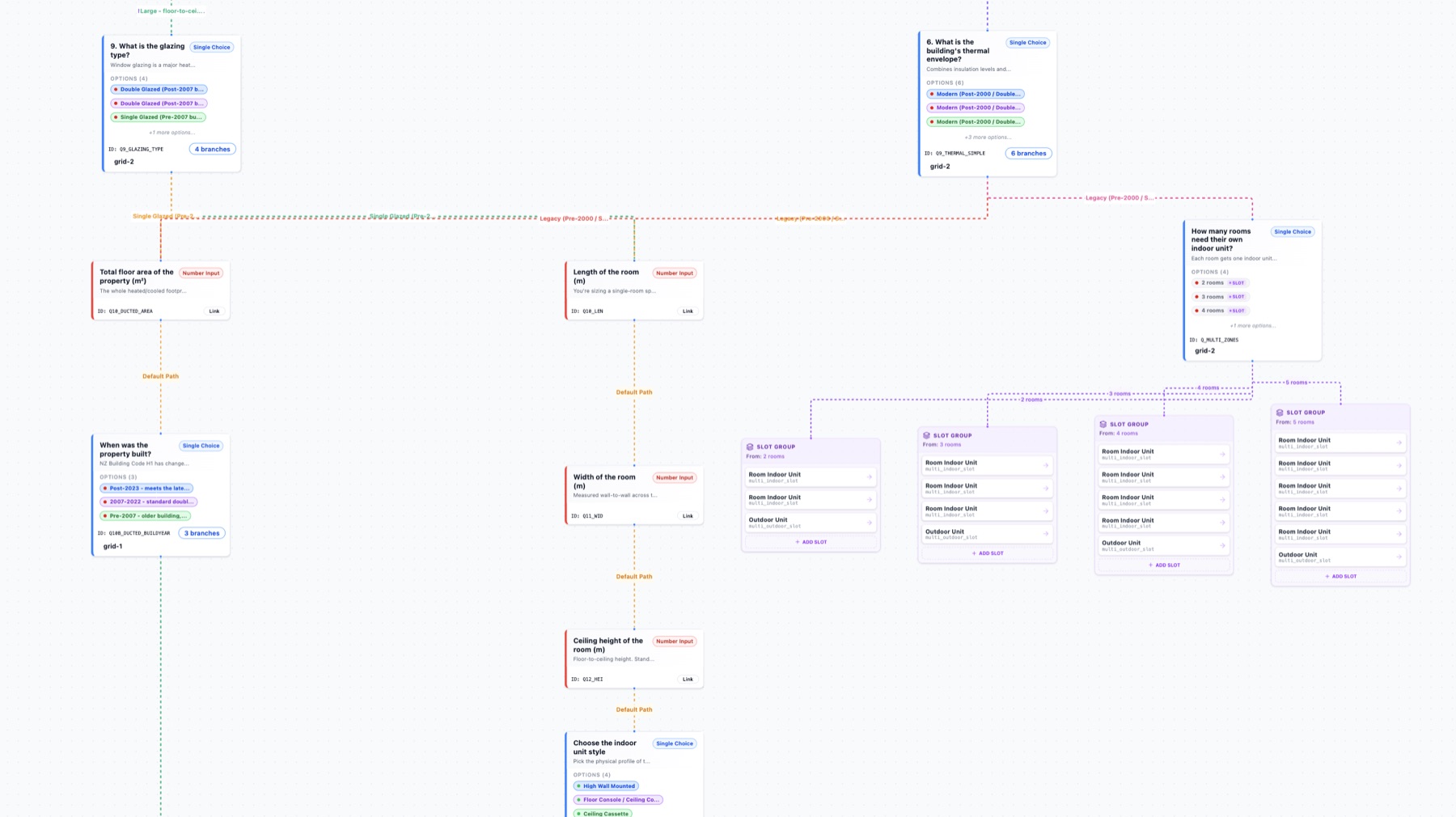
The better approach is to put Dave's thinking where your team actually works. A guided product selector asks the customer the same questions Dave would ask, in plain language, and comes back with the product Dave would recommend. Your counter staff can run it with a customer in front of them. Your phone team can run it on a call. Your customers can run it themselves on your website.
Dave doesn't disappear in all this. He's the one who checks it. He runs real jobs through it, points out where it's wrong, and it gets corrected until it gives his answer. After that, his job changes from answering every question to keeping the tool right, which is a much better use of twenty years of experience.
Where to start
Don't try to capture everything at once. Pick the one product range Dave gets pulled into most, the one that generates the most calls, the most hesitation and the most returns. Get that right first, then add the next one.
Dave will retire one day. The knowledge doesn't have to go with him.
Got a Dave? Tell us which range he gets asked about most and we'll show you what a selector for it would look like.